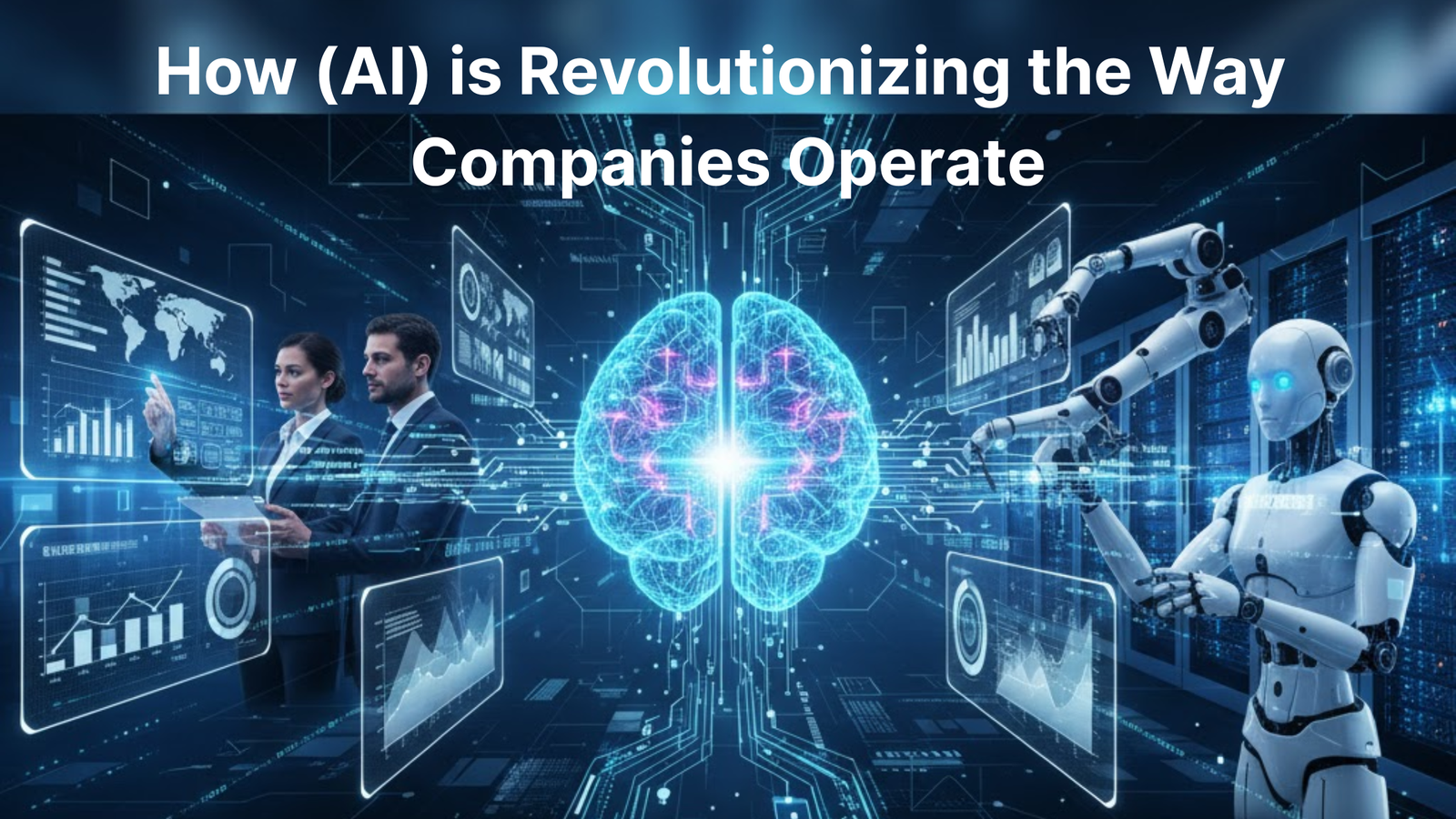
We have entered a new era in which machines think, analyze, and make judgments exactly like people do. From a trendy term to the foundation of contemporary business, artificial intelligence enables organizations to operate more effectively, quickly, and intelligently.
However, why is AI such a revolutionary technology? We must examine how it both resembles and deviates from human intellect in order to comprehend its significance.
Understanding Artificial Intelligence in Simple Terms
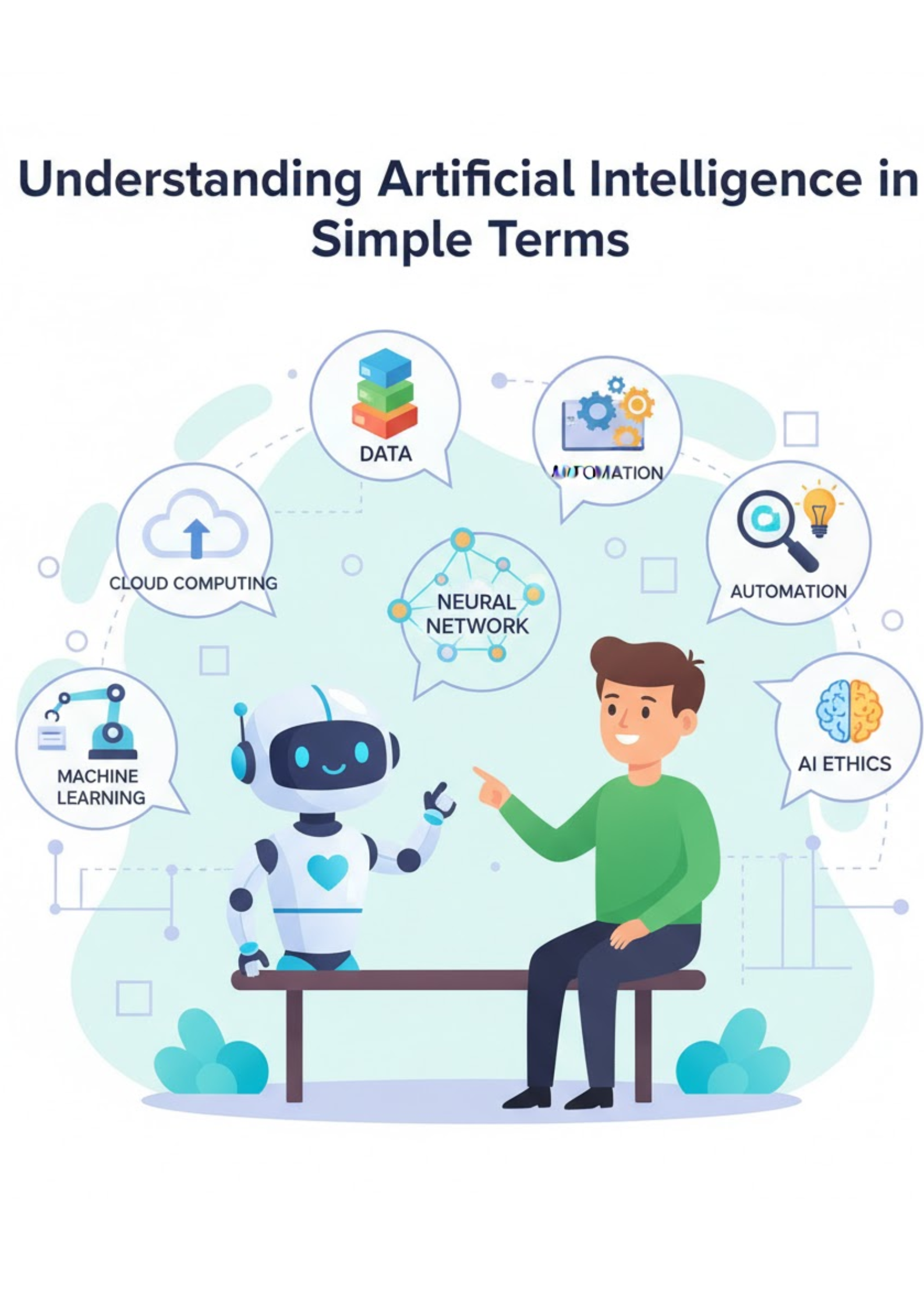
In the simplest sense, artificial intelligence refers to the ability of machines or computer systems to perform tasks that typically require human intelligence—like learning from experience, understanding language, recognizing patterns, and making decisions.
While human intelligence is rooted in emotions, intuition, and adaptability, AI relies on data and algorithms. The two are connected, yet distinct: AI mimics how humans think, but it operates on logic and speed rather than emotion and experience.
Think of it like this:
- Human intelligence is creative, emotional, and flexible—it can make judgments even with incomplete data.
- Artificial intelligence is analytical, data-driven, and tireless—it excels at identifying patterns, optimizing processes, and handling vast amounts of information.
Rather than replacing humans, AI acts as an extension of human intelligence—enhancing our capabilities and freeing us from repetitive, time-consuming tasks.
The Growing Role of Artificial Intelligence in Business
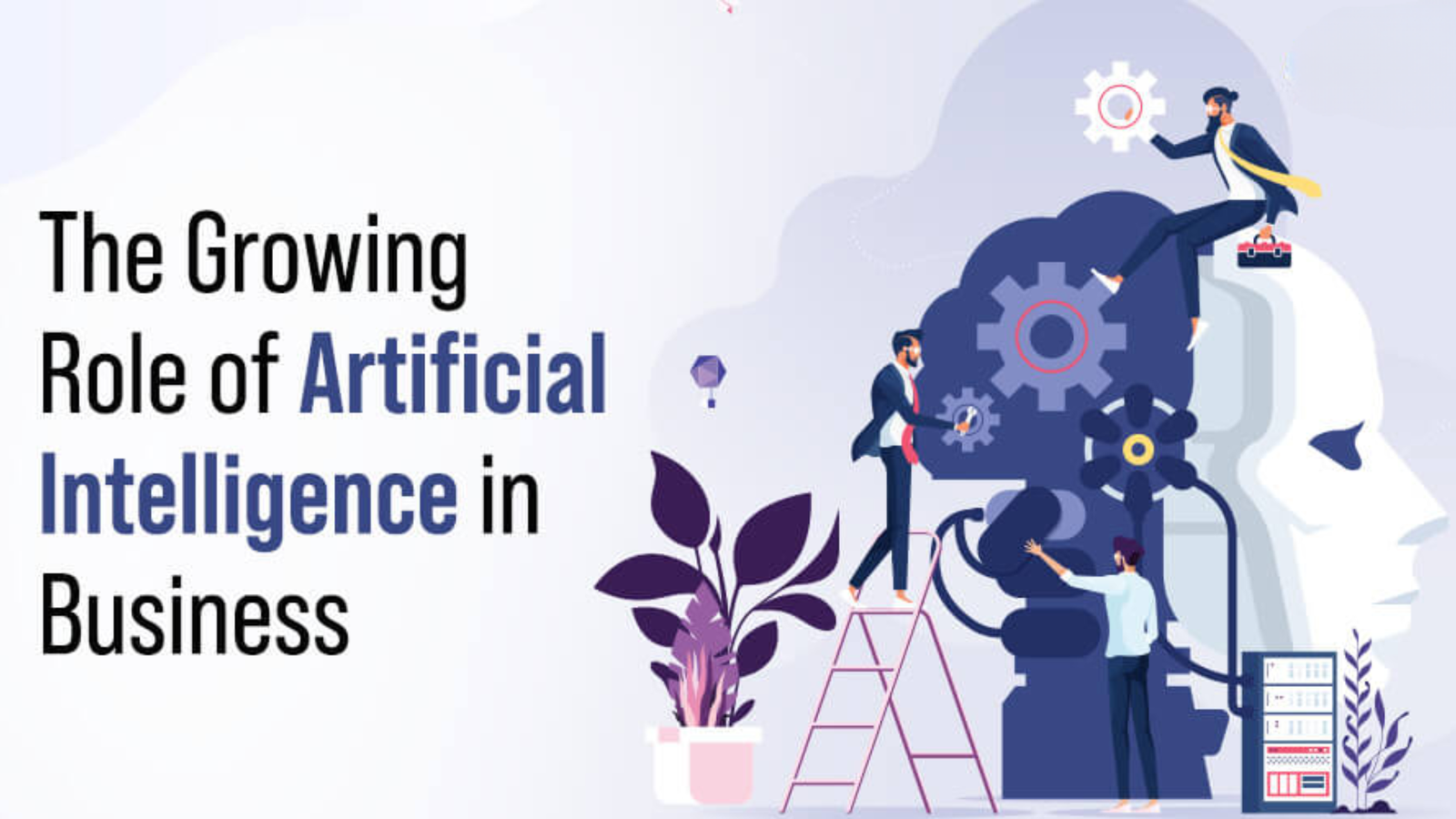
In the past decade, AI adoption in business has soared. From startups to global giants, companies are using AI to streamline operations, personalize customer experiences, and make smarter, data-driven decisions.
According to McKinsey, over 60% of organizations now use at least one AI tool—from predictive analytics to automated customer support.
Here’s how AI is transforming key areas of business:
1. Smarter Decision-Making with Data-Driven Insights
Business decisions used to depend heavily on human intuition, which, while valuable, was prone to bias and errors. Today, AI bridges that gap with data analytics and predictive modeling that deliver real-time insights.
AI-powered tools like Google Cloud AI and IBM Watson analyze massive datasets to reveal trends, opportunities, and risks that human analysts might overlook. For instance:
- Coca-Cola uses predictive analytics to determine which beverage products perform best in specific demographics, helping refine its inventory and marketing strategies.
- Netflix uses AI algorithms to study viewing patterns, ensuring content recommendations align perfectly with user preferences.
With AI in business, decision-making becomes faster, more accurate, and deeply personalized.
2. Automating Repetitive Business Operations
Automation is perhaps the most practical face of artificial intelligence in business. Tasks that once required hours of manual labor—like data entry, scheduling, and report generation—can now be handled in seconds by AI bots.
Tools such as UiPath and Automation Anywhere help businesses automate workflows, freeing employees for higher-value creative and strategic tasks.
For example:
- Amazon uses AI-driven robots across its warehouses to handle inventory logistics with speed and precision.
- Accenture employs AI-powered process automation to cut administrative workload and improve client delivery times.
The result? Reduced costs, enhanced productivity, and more consistent quality across operations.
3. Revolutionizing Customer Engagement and Experience
Customer experience is where AI in business shines the brightest. Personalized interaction is no longer optional—it’s an expectation. Artificial intelligence enables businesses to understand and predict customer needs through behavior analysis and conversational tools.
- ChatGPT and other conversational AI systems have transformed customer support by enabling 24/7 intelligent interactions.
- AI chatbots on e-commerce sites can recommend products, track orders, and resolve common queries in real time.
- Spotify uses AI algorithms to create personalized playlists based on listening habits, keeping users engaged.
These applications make customer engagement more responsive, adaptive, and human-like—ironically powered by machines.
4. Enhancing Marketing and Sales Strategies
Modern marketing thrives on personalization—and artificial intelligence in business makes it possible at scale. Machine learning helps marketers target the right customer, at the right time, with the right message.
AI marketing tools like HubSpot, Jasper AI, and Salesforce Einstein enable teams to predict which leads are most likely to convert, optimize ad spend, and automate email sequences with tailored messaging.
Consider how Sephora uses AI-driven personal assistants online to recommend makeup products. The system analyzes customer inputs, reviews, and purchase history to craft personalized beauty experiences—turning casual browsers into loyal buyers.
By blending data and creativity, AI helps brands speak directly to consumer needs with precision that human intelligence alone can’t replicate at scale.
5. Improving Human Resource and Workforce Management
AI isn’t just for machines—it’s making human teams smarter too. In business operations, AI in HR assists with recruitment, employee retention, and performance analysis.
- LinkedIn Talent Insights leverages AI to identify potential candidates based on skills, experience, and compatibility.
- IBM’s Watson AI assists managers by predicting employee turnover risks and suggesting retention strategies.
- AI-based scheduling systems optimize workloads, preventing burnout while improving project efficiency.
With artificial intelligence, businesses can create more dynamic and efficient teams that align people’s strengths with organizational goals.
6. Strengthening Security and Risk Management
In a world dominated by data, cybersecurity is non-negotiable. Artificial intelligence plays a crucial role in detecting anomalies, predicting potential security breaches, and automating threat responses.
Financial institutions like Mastercard and JPMorgan Chase employ AI to monitor millions of transactions per day, identifying potential fraudulent activity within milliseconds.
AI-driven security systems learn over time, adapting to new attack patterns far faster than traditional human-led models. This fusion of artificial intelligence and human intelligence ensures that responses are not only ultra-fast but also contextually accurate.
Real-World Examples of Artificial Intelligence in Business
- Tesla – Redefining autonomous transportation through AI image recognition and predictive analytics, enabling cars to make real-time driving decisions.
- Google – Using AI-powered search algorithms and ad personalization to deliver precise results based on user behavior.
- Starbucks – Leveraging the AI program “Deep Brew” to personalize customer recommendations and optimize store-level operations.
- Adobe – Integrating AI through Adobe Sensei to help marketers analyze creative performance, automate design suggestions, and scale content faster.
- IBM – Enabling advanced predictive modeling in healthcare, finance, and logistics through cognitive computing platforms like Watson.
These examples illustrate how artificial intelligence in business isn’t a futuristic concept—it’s an evolving necessity driving global competitiveness.
7. Redefining Collaboration Between Human and Artificial Intelligence
Contrary to common fears, AI isn’t here to replace humans—it’s here to empower them. The strongest companies of today—and tomorrow—will be the ones combining artificial intelligence with human intelligence.
Humans bring creativity, ethics, empathy, and critical thinking. AI amplifies those qualities by handling the data, speed, and analysis.
Together, they create what many experts call the “augmented intelligence” era, where humans and machines work in harmony.
For example:
- AI drafts content or generates insights, while humans edit for emotional tone and authenticity.
- Predictive systems suggest actions, and human leaders make ethically guided decisions.
This synergy is what will define competitive advantage in the years ahead.
Popular AI Tools Transforming Businesses
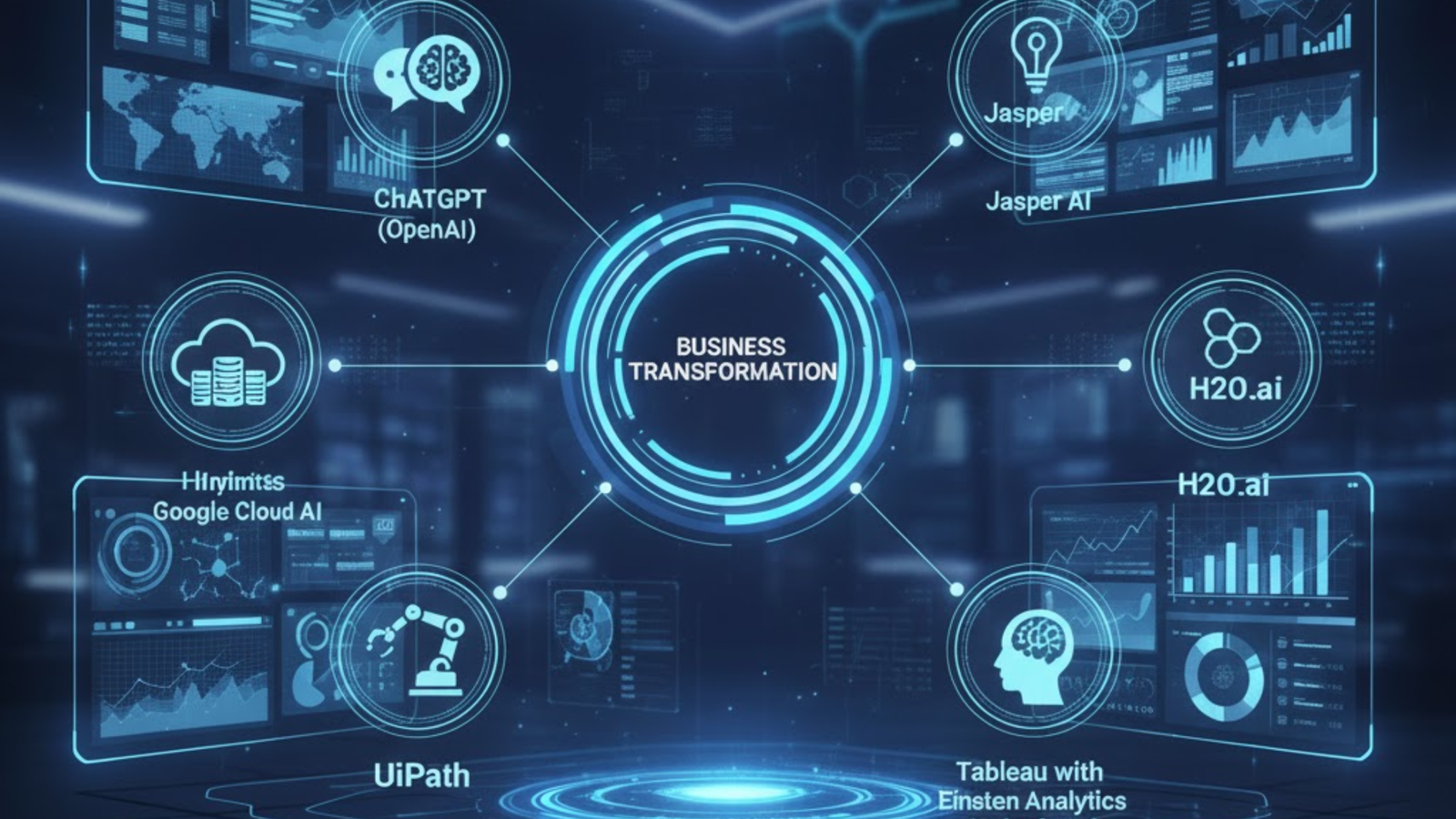
- ChatGPT (OpenAI) – Conversational AI for communication, support, and content creation.
- Google Cloud AI – Advanced machine learning models integrated into enterprise analytics.
- Tableau with Einstein Analytics (Salesforce) – Data visualization powered by AI-driven insights.
- UiPath – Robotic process automation for repetitive business workflows.
- H2O.ai – Predictive analytics and machine learning for data-heavy industries.
- Jasper AI – AI-driven marketing and copywriting for content teams.
These tools showcase the broad versatility of AI in business, addressing different pain points from automation to creativity.
Challenges and Ethical Considerations
While artificial intelligence brings enormous potential, it also poses challenges—especially around data privacy, decision transparency, and workforce adaptation.
Businesses adopting AI must ensure:
- Ethical handling of customer data.
- Transparent decision-making algorithms.
- Workforce reskilling to manage AI-integrated environments.
Balancing innovation with ethics will determine long-term trust and success in this new digital ecosystem.
The Future of Artificial Intelligence in Business
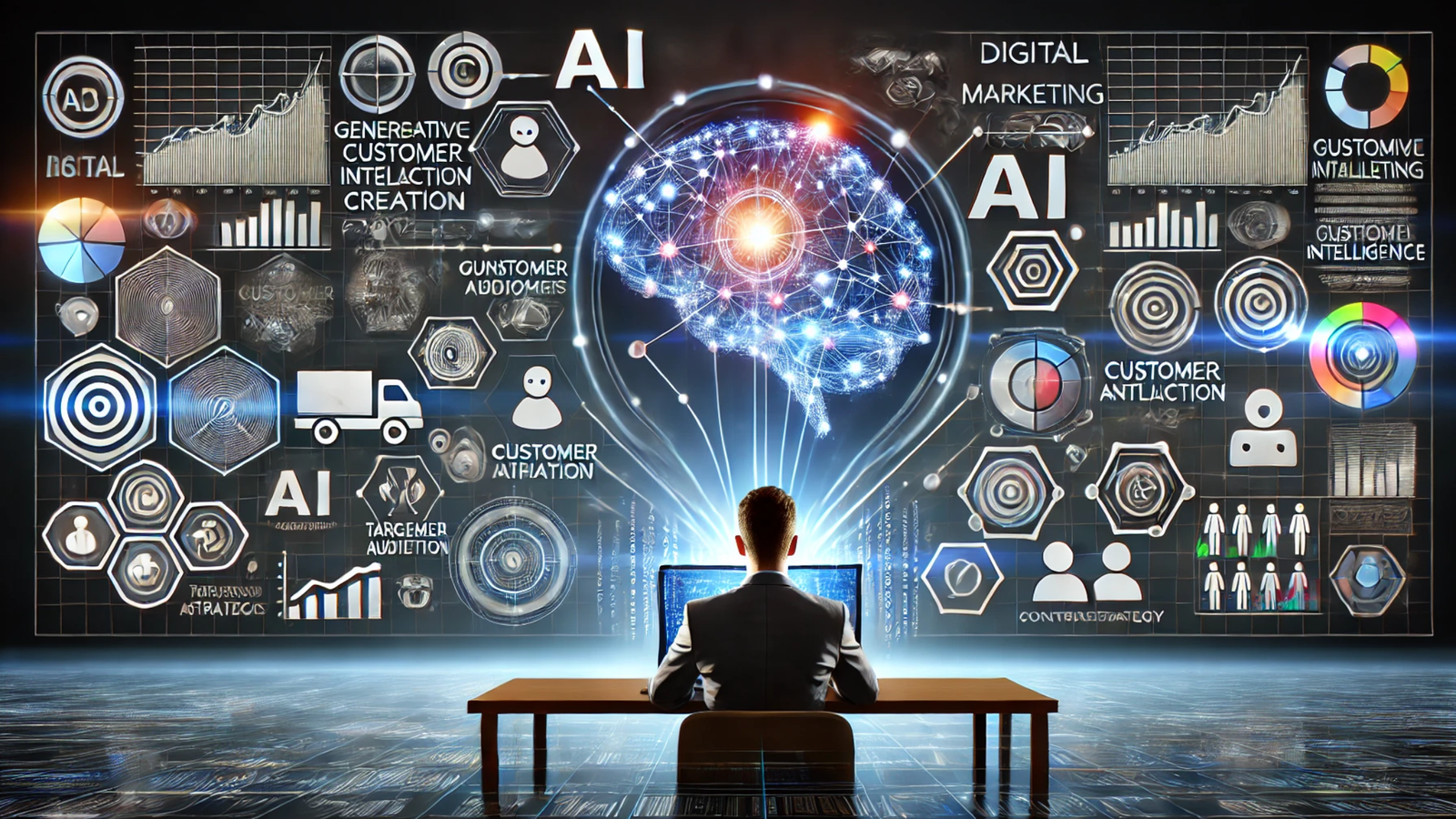
Looking ahead, AI’s role in business will only deepen. As technologies mature, we’ll see every industry—retail, healthcare, manufacturing, finance—operate through integrated AI ecosystems.
In the coming decade:
- Predictive analytics will become central to strategy planning.
- AI-driven personalization will redefine customer loyalty.
- Automation will reshape workforce models globally.
- Hybrid intelligence (human + AI) will lead to smarter, purpose-driven organizations.
Ultimately, artificial intelligence in business represents far more than technology—it’s a mindset shift toward efficiency, innovation, and scalability.
Looking Ahead
The future favors businesses that see AI not just as a tool, but as a growth partner. By blending human insight with AI’s power, companies can redefine value, connect better with customers, and stay ahead. The message is simple: investing in AI today shapes the success stories of tomorrow.