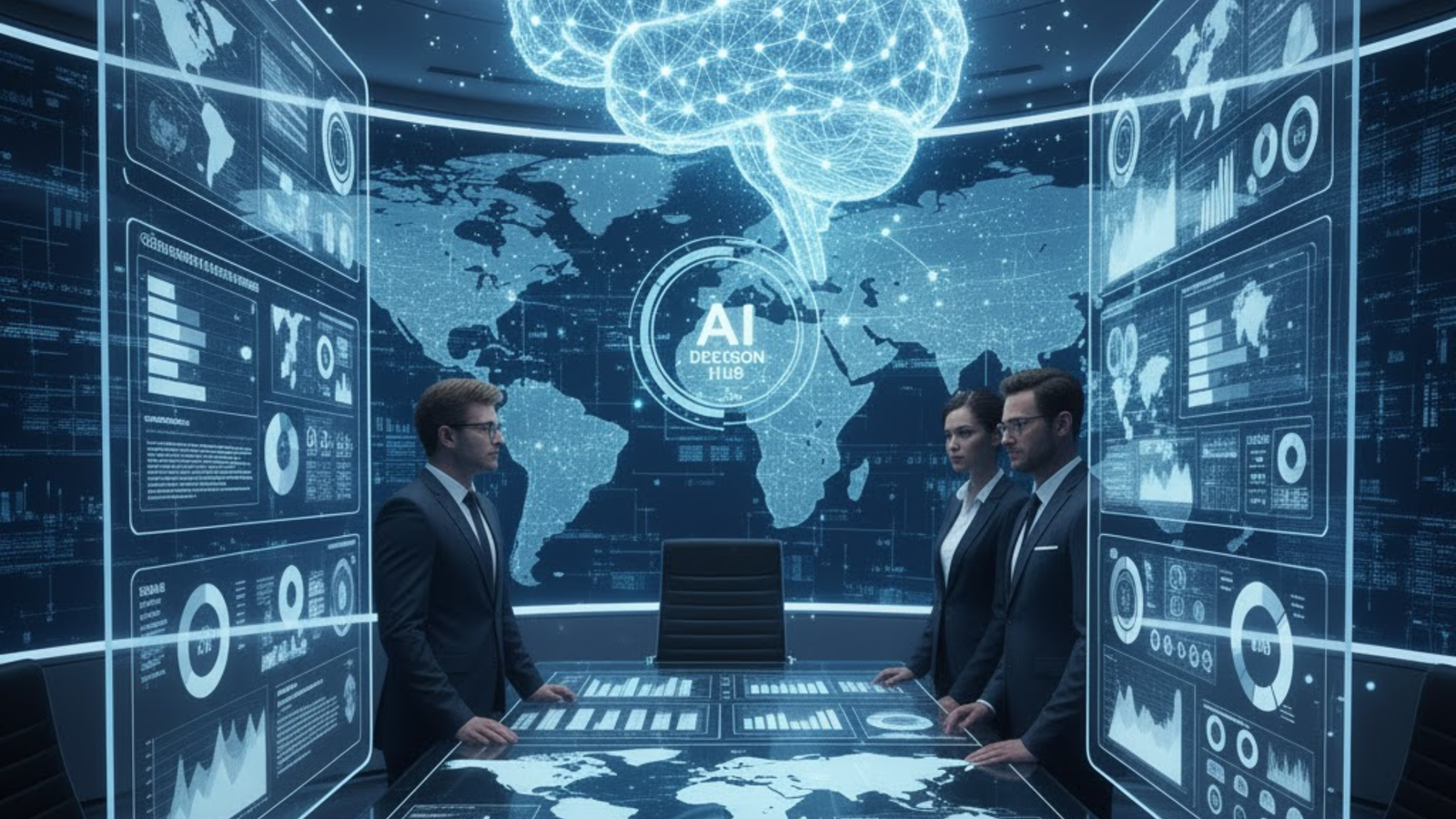
In today’s hyper-competitive business landscape, making the right decision at the right time can mean the difference between market leadership and obsolescence. Enter artificial intelligence—a transformative force that’s rewriting the rules of corporate strategy and operational excellence. AI in enhancing business processes has moved from a futuristic concept to an everyday reality, empowering organizations to make smarter, faster, and more precise decisions than ever before.
AI in business decision-making is no longer a luxury reserved for tech giants; it’s becoming a fundamental requirement for businesses of all sizes. From predicting customer behavior to optimizing supply chains, artificial intelligence is fundamentally changing how leaders approach strategy, planning, and growth. This article explores how AI is revolutionizing business strategy and why embracing this technology is critical for sustainable competitive advantage.
The Evolution of AI in Business Decision-Making
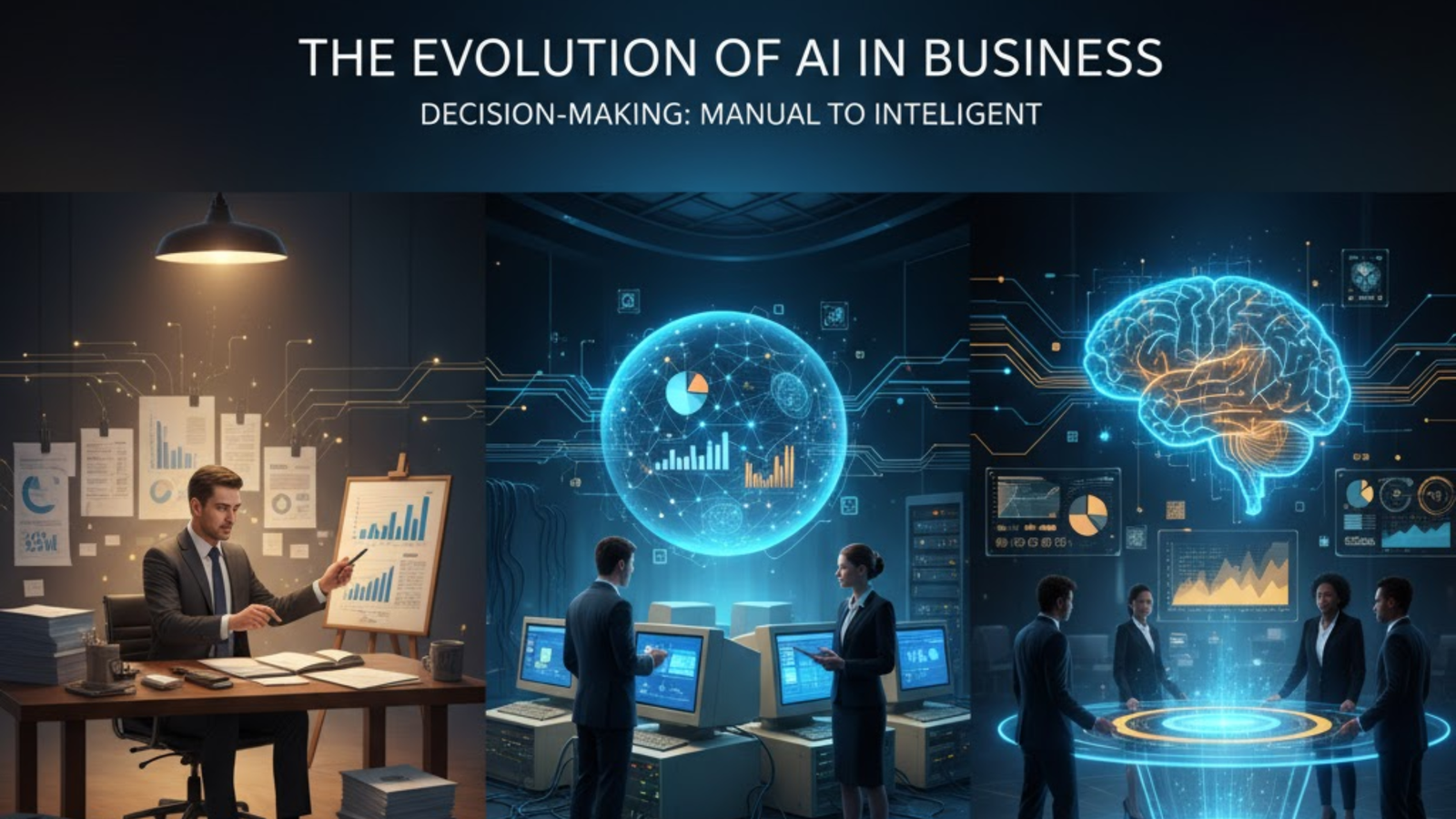
Business decision-making has undergone a remarkable transformation over the past few decades. Traditionally, executives relied heavily on intuition, past experiences, and limited datasets to guide their strategic choices. While human judgment remains valuable, this approach often leads to biases, missed opportunities, and reactive rather than proactive strategies.
The digital revolution brought mountains of data, but manual analysis couldn’t keep pace with the volume and velocity of information. This created a critical gap—businesses were data-rich but insight-poor. The emergence of AI for business analytics bridged this divide, enabling organizations to transform raw data into actionable intelligence.
Today’s data-driven business strategy leverages sophisticated algorithms that can process millions of data points in seconds, identify patterns invisible to the human eye, and generate predictive insights that inform strategic planning. This evolution represents a fundamental shift from gut-feeling decisions to evidence-based strategies powered by artificial intelligence.

The integration of artificial intelligence in business strategy represents one of the most significant management innovations of our time. AI doesn’t replace human strategists; instead, it amplifies their capabilities by providing unprecedented analytical depth and foresight.
Organizations are increasingly deploying AI tools for decision-making across their strategic functions. These tools analyze market trends, consumer sentiment, competitive movements, and economic indicators simultaneously—something no human team could accomplish manually. For instance, retail companies use AI to predict seasonal demand fluctuations, enabling them to optimize inventory levels and reduce waste.
Financial institutions leverage AI to assess investment risks and opportunities in real-time, adjusting portfolios based on global market movements. Manufacturing firms utilize AI-powered predictive maintenance systems that forecast equipment failures before they occur, minimizing downtime and maximizing productivity.
What makes artificial intelligence in business strategy particularly powerful is its ability to consider countless variables simultaneously while learning and improving from each decision cycle. This creates a continuously enhancing feedback loop where strategic planning becomes increasingly sophisticated and accurate over time.
Key Benefits of AI in Business Strategy and Planning
Understanding the benefits of AI in business strategy and planning helps organizations prioritize their AI investments. Here are the transformative advantages that AI brings to strategic decision-making:
- Improved Forecasting and Accuracy
AI algorithms analyze historical data, market conditions, and external factors to generate highly accurate predictions about future trends. This precision reduces uncertainty and enables proactive strategy development rather than reactive crisis management.
- Enhanced Data Interpretation
Modern businesses generate enormous amounts of data across multiple channels. AI excels at synthesizing this information, identifying meaningful correlations, and presenting insights in digestible formats that inform strategic choices.
- Real-Time Decision-Making
Unlike traditional analysis that might take days or weeks, AI processes information instantaneously. This enables businesses to respond to market changes, customer needs, and competitive threats in real-time, maintaining agility in dynamic environments.
- Cost and Time Efficiency
By automating routine analytical tasks, AI frees strategic leaders to focus on creative problem-solving and innovation. The time saved translates directly into faster strategy implementation and reduced operational costs.
- Risk Mitigation Through Predictive Analysis
Perhaps one of the most valuable benefits of AI in business strategy and planning is its ability to identify potential risks before they materialize. AI systems can detect early warning signals in data patterns, allowing organizations to implement preventive measures and protect against adverse outcomes.
The Role of AI in Business Growth

When we examine the role of AI in business growth, we see it functioning as a catalyst for innovation and expansion across industries. AI in business decision-making directly contributes to growth by enabling companies to identify new market opportunities, optimize resource allocation, and scale operations efficiently.
Consider a mid-sized e-commerce company struggling to expand into international markets. By implementing AI-powered market analysis tools, the company can identify which geographic regions show the strongest demand signals, what pricing strategies resonate with local consumers, and which marketing channels deliver the best ROI—all before committing significant resources.
The role of AI in business growth extends to product development as well. AI analyzes customer feedback, usage patterns, and market gaps to suggest product improvements or entirely new offerings that align with emerging needs. This data-driven innovation approach significantly reduces the risk of product failures and accelerates time-to-market.
Furthermore, AI enables businesses to scale personalization at levels previously impossible. Whether it’s customizing customer experiences, tailoring product recommendations, or optimizing communication strategies, AI allows companies to treat each customer as an individual while serving millions—a powerful driver of customer satisfaction and revenue growth.
Artificial Intelligence in Strategic Planning
Artificial intelligence in strategic planning represents the pinnacle of how technology can enhance executive decision-making. Strategic planning requires synthesizing vast amounts of internal and external information, evaluating multiple scenarios, and making choices that will impact the organization for years to come.
AI enhances this process by conducting sophisticated scenario modeling. Strategic planners can input various assumptions about market conditions, competitive responses, or regulatory changes, and AI simulates hundreds of potential outcomes. This capability transforms strategic planning from a single-path projection into a comprehensive exploration of possibilities.
The application of artificial intelligence in strategic planning also improves competitive intelligence. AI continuously monitors competitor activities, market positioning, and strategic moves, alerting leadership teams to shifts that require strategic responses. This vigilance ensures organizations never operate in an information vacuum.
Additionally, AI helps prioritize strategic initiatives by quantifying their potential impact. When resources are limited and executives must choose between competing strategic projects, AI-powered analysis provides objective assessments of which initiatives offer the greatest return on investment and strategic value.
Future Outlook: The Next Phase of AI in Business
As we look ahead, AI for business analytics and strategic planning will become even more sophisticated and accessible. We’re moving toward autonomous decision-making systems where AI doesn’t just recommend actions but implements them within predefined parameters—think dynamic pricing algorithms that adjust in real-time or supply chain systems that automatically reroute shipments based on disruption predictions.
The next generation of data-driven business strategy will incorporate emotional intelligence and contextual understanding. AI systems will better interpret qualitative factors like brand sentiment, organizational culture, and stakeholder concerns, complementing their existing quantitative strengths.
We’ll also see increased democratization of AI capabilities, with small and medium enterprises gaining access to sophisticated AI tools previously available only to large corporations. This leveling of the playing field will intensify competition while creating new opportunities for agile, AI-savvy organizations.
The integration of AI with other emerging technologies—including blockchain, Internet of Things, and advanced robotics—will create entirely new strategic possibilities. Organizations that begin building their AI capabilities now will be positioned to lead in this evolving landscape.
Conclusion
The role of AI in enhancing business decision-making and strategy has evolved from experimental to essential. Organizations that embrace artificial intelligence in business strategy gain measurable advantages in accuracy, speed, efficiency, and innovation. The benefits of AI in business strategy and planning extend across every functional area, from operations to customer experience to financial management.
As the business environment grows increasingly complex and competitive, the question is no longer whether to adopt AI but how quickly and effectively you can integrate it into your strategic framework. The role of AI in business growth will only intensify, making early adopters the likely winners in the decade ahead.
Success in the AI-powered future belongs to organizations that view artificial intelligence not as a replacement for human judgment but as an amplifier of human potential—combining the analytical power of machines with the creativity, ethics, and vision that only people can provide. Embrace AI today, and position your business for sustainable, intelligent growth tomorrow.