
Artificial Intelligence (AI) is no longer just a fancy term — it’s now the main force driving business growth. In 2026, AI is changing the way startups plan, work, and compete. From handling mundane, repetitive tasks to facilitating informed decision-making, AI is making it easier for founders to grow their businesses faster and smarter.
In today’s world, AI in 2026 isn’t something extra — it’s a must-have. Whether you run an online store, a software company, or a small service business, AI for startups is becoming the best tool for faster growth. Let’s see how startups can use artificial intelligence to save time, work smarter, and stay ahead of the competition in 2026 and the years to come.
The Rise of AI for Startups

The global startup ecosystem is evolving rapidly, and Artificial Intelligence is at the heart of this transformation. According to recent AI startup trends 2026, over 70% of new startups are integrating AI-driven tools into their business models — from marketing automation to predictive analytics.
In India, the momentum is even stronger. The government’s “Digital India” and “AI for All” initiatives have opened doors for innovation and funding, leading to a surge in AI solutions for startups in India. Indian entrepreneurs are increasingly using AI for business automation, customer engagement, and smarter decision-making.
Why Startups Are Turning to AI
- Efficiency: AI automates routine tasks, freeing up time for founders to focus on strategy.
- Cost reduction: Early-stage startups can reduce operational costs with AI tools for small businesses.
- Smarter decision-making: AI-powered analytics provide deeper market insights for better planning.
- Personalization: AI enables startups to tailor user experiences like never before.
In short, AI in 2026 isn’t just for tech giants—it’s the driving force behind global AI startup growth, making cutting-edge innovation accessible to all.
How Can Startups Use AI?

The question is not if startups should use AI, but how. Here are the primary areas where artificial intelligence is transforming companies across industries:
1. Marketing and Customer Engagement
AI marketing platforms help startups analyze customer data, optimize campaigns, and predict buying behavior.
- Use AI chatbots for real-time engagement.
- Leverage predictive analytics for lead scoring.
- Automate social media content with tools like Jasper and Copy.ai.
This means startups can run smarter campaigns without hiring large marketing teams — a major advantage for lean operations.
2. Product Development and Innovation
AI accelerates product research and innovation. Machine learning models can analyze market gaps, user reviews, and competitor products to guide your next big idea.
- Use AI tools to simulate user interactions and test prototypes.
- Analyze customer feedback to improve UX/UI.
- Identify trends before your competitors do.
In short, AI helps startups build products that people actually want.
3. Operations and Automation
Running a startup involves endless operational tasks — invoicing, HR, scheduling, data entry, and more.
- AI-powered automation tools like Zapier, Notion AI, and ClickUp can save hundreds of hours monthly.
- Using AI for business automation improves accuracy and allows teams to focus on core growth activities.
Automation is the secret to scaling efficiently without burning out your team or budget.
4. Decision-Making and Analytics
Data is the new gold, and AI is the miner. Startups can use AI analytics platforms to uncover patterns, track KPIs, and predict future outcomes.
- Use AI dashboards like Power BI or Tableau with machine learning integration.
- Forecast sales, demand, or churn rates using predictive algorithms.
- Make faster, data-driven decisions with confidence.
With AI, startups can shift from “guesswork” to smart work.
5. Customer Support and Personalization
AI-driven chatbots and recommendation engines enhance user experience around the clock.
- Integrate chatbots for 24/7 support.
- Use AI to suggest products or services based on past behavior.
- Personalize emails and offers automatically.
By offering fast and personalized service, startups can build stronger brand loyalty and retain more customers.
Best AI Tools for Startup Founders
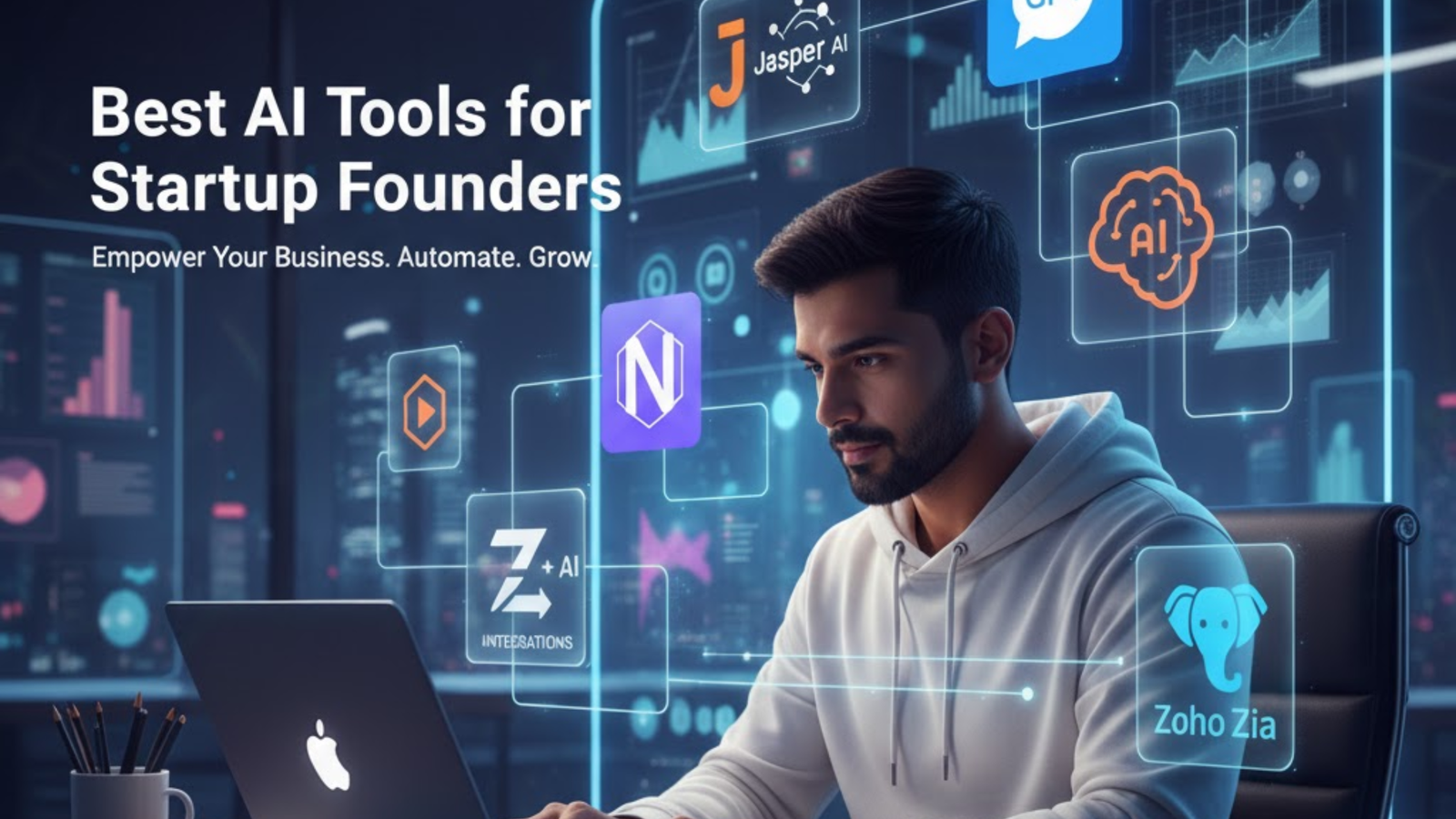
Choosing the right tools is the first step toward AI-powered success. Here are some of the best AI tools for startup founders in 2026:
- ChatGPT (OpenAI) – For content creation, brainstorming, and customer interaction automation.
- Jasper AI – Helps marketing teams generate ad copy, blogs, and emails faster.
- Notion AI – A smart productivity assistant for note-taking, task management, and project summaries.
- Paddle AI – For revenue optimization and subscription analytics in SaaS startups.
- Zapier + AI Integrations – Connects apps to automate workflows and reduce manual tasks.
- Synthesia – For creating AI-powered videos and product demos without hiring a production team.
- Zoho Zia – A built-in AI assistant for CRM, sales forecasting, and lead management — ideal for small businesses.
These AI tools for small businesses allow founders to save time, reduce costs, and improve efficiency — all while scaling smarter.
Building AI-Driven Business Strategies

To succeed in 2026, startups need to move past using AI merely as a tool and focus on creating AI-driven business strategies. This involves embedding AI in 2026 across every stage of their business — from planning and operations to customer engagement and retention.
Here’s how:
- Define your AI goals: Start by identifying key areas where AI can create value (e.g., marketing, customer service, or operations).
- Collect and organize data: Data is fuel for AI. Ensure your startup collects clean, structured data.
- Integrate AI tools gradually: Begin with automation and move toward predictive analytics.
- Monitor results and optimize: Track performance metrics and refine strategies continuously.
Examples of Startups Using AI Successfully
- Lenskart uses AI for facial mapping and personalized eyewear recommendations.
- Zomato applies AI to improve food delivery routes and predict customer preferences.
- CureSkin leverages AI-powered dermatology analysis for personalized skincare solutions.
These examples highlight how AI in business growth enables startups to scale intelligently and stay ahead of competitors.
The Future of AI in Business Growth
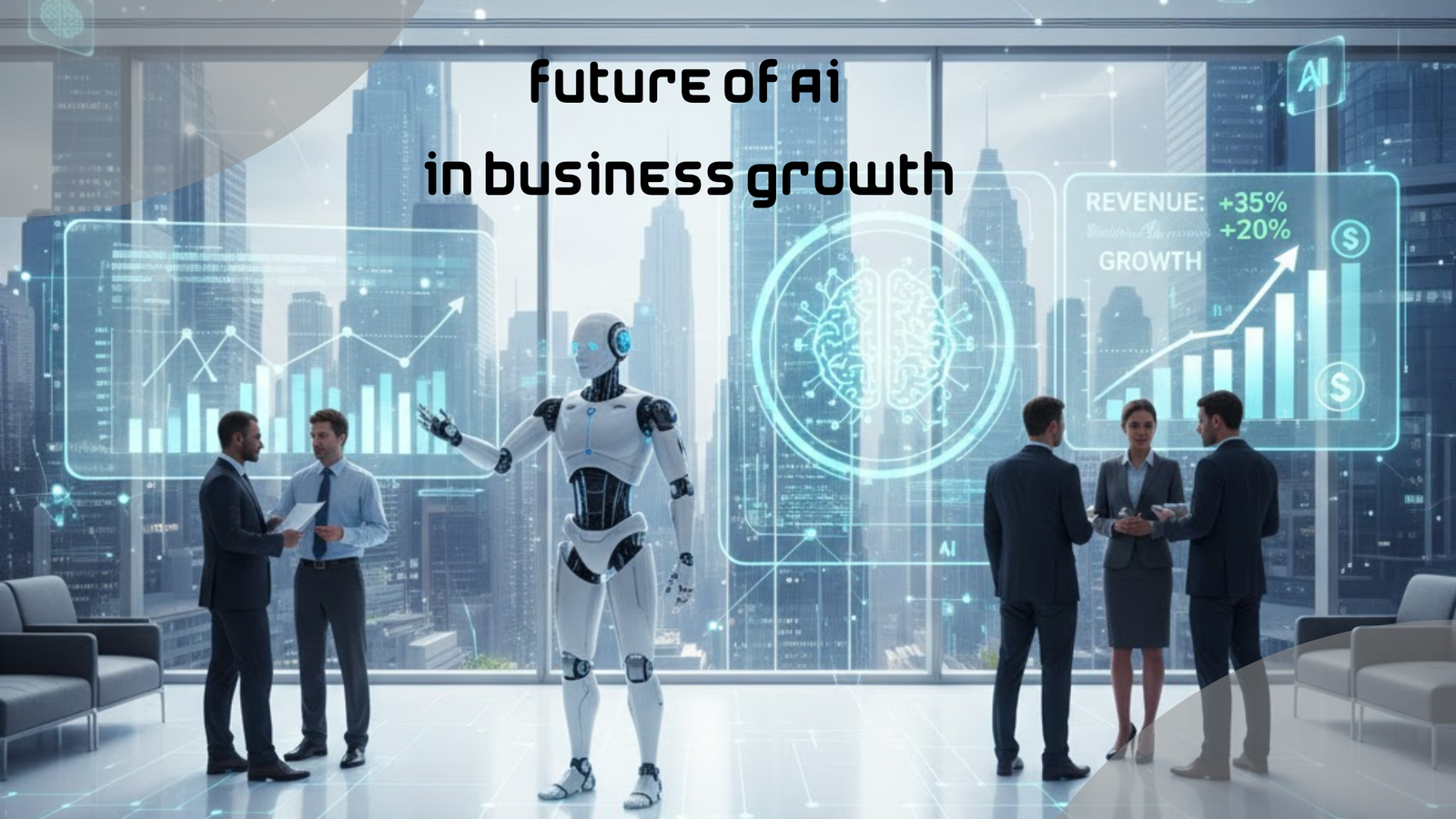
Looking ahead, AI startup trends 2026 point toward even greater integration of AI across all business areas. Startups will increasingly use generative AI for product design, robotic process automation for operations, and hyper-personalized marketing campaigns driven by deep learning models.
In India, affordable access to cloud-based AI solutions for startups will make advanced technology available to even small-town entrepreneurs. As AI continues to evolve, its role in AI startup growth will shift from a “support tool” to a “strategic co-founder,” driving innovation and decision-making.
The startups that invest in AI early will not only survive but also dominate the market.
Closure
AI is transforming the startup ecosystem — from how founders make decisions to how customers interact with brands. The year 2026 marks a defining moment where AI for startups transitions from optional to indispensable.
By embracing AI tools for startups, building AI-driven business strategies, and leveraging automation, entrepreneurs can work smarter, scale faster, and stay ahead of the curve.
Startups that think smarter with AI today will lead tomorrow.